One of the biggest concerns homeowners have before starting an interior design project is:
“What exactly happens after I hire an interior designer?” Let’s explain the interior design process in this article.
Many people assume interior design is simply choosing colors and furniture. In reality, a successful interior project involves a structured process that takes a home from an empty space to a fully finished, move-in-ready environment.
Understanding the interior design process helps homeowners:
- Set realistic expectations
- Plan budgets effectively
- Avoid costly mistakes
- Understand project timelines
- Make informed decisions
This guide explains the complete interior design journey—from the first consultation to final handover.
Why Understanding the Interior Design Process Matters
A well-defined process ensures:
- Better project planning
- Fewer surprises
- Smoother execution
- Higher quality outcomes
When homeowners understand the stages involved, communication becomes easier and projects tend to run more efficiently.
Stage 1: Requirement Gathering & Discovery
Everything begins with understanding the homeowner’s needs.
What Happens During This Stage?
The interior designer gathers information about:
Lifestyle Requirements
- Family size
- Daily routines
- Work-from-home needs
- Storage requirements
Design Preferences
- Modern interiors
- Contemporary style
- Luxury aesthetics
- Minimalist design
Budget Expectations
- Overall project budget
- Priority areas
- Desired level of customization
Project Scope
- Full home interiors
- Modular kitchen
- Wardrobes
- Renovation work
Why This Stage Is Critical
Many interior design mistakes occur because requirements are not properly understood at the beginning.
A thorough discovery process helps create a design that reflects how the homeowner actually lives.
Stage 2: Site Measurement & Analysis
Once requirements are understood, the site is measured and documented.
Activities Include:
Detailed Measurements
- Room dimensions
- Window locations
- Door openings
- Ceiling heights
Site Assessment
- Structural limitations
- Existing electrical points
- Plumbing layouts
- Natural lighting conditions
Why Site Analysis Matters
Good design depends on accurate measurements.
Even small measurement errors can create major execution challenges later.
Stage 3: Space Planning & Layout Design
This is where the design process truly begins.
What Is Space Planning?
Space planning focuses on arranging:
- Furniture
- Circulation pathways
- Storage solutions
- Functional zones
Key Questions Designers Solve
How will people move through the space?
The layout should feel natural and comfortable.
Is storage adequate?
Storage should support daily living without creating clutter.
Is furniture appropriately sized?
Oversized furniture can make rooms feel cramped.
Deliverables
Typically include:
- Furniture layouts
- Zoning plans
- Space utilization concepts
Stage 4: Design Concept Development
Now the project begins to take visual shape.
What Happens Here?
The designer develops a cohesive design direction.
Design Theme Selection
Examples include:
- Contemporary
- Modern luxury
- Scandinavian
- Minimalist
- Transitional
Material Exploration
Potential materials are identified:
- Laminates
- Veneers
- Stone finishes
- Glass
- Metals
Color Palette Development
The designer creates a coordinated color story for the home.
Goal of This Stage
To establish a clear design identity before detailed development begins.
Stage 5: 3D Design & Visualization
This is often the most exciting stage for homeowners.
What Are 3D Designs?
Photorealistic visualizations that show:
- Furniture
- Materials
- Lighting
- Colors
- Overall ambience
Benefits of 3D Visualization
Better Decision Making
Homeowners can see the design before execution begins.
Reduced Risk
Potential issues can be identified early.
Improved Confidence
Clients know what to expect from the final outcome.
Stage 6: Material Selection & Finalization
After approving the design direction, detailed material decisions are made.
Common Selections Include
Furniture Materials
- Plywood
- HDHMR
- MDF
Surface Finishes
- Laminates
- Acrylics
- PU finishes
- Veneers
Countertops
- Granite
- Quartz
- Marble
Flooring
- Tiles
- Wooden flooring
- Stone surfaces
Why Material Selection Is Important
Material choices affect:
- Durability
- Maintenance
- Appearance
- Budget
Stage 7: Detailed Drawings & Technical Documentation
This stage converts concepts into executable plans.
Drawings Typically Include
Carpentry Drawings
Detailed dimensions and construction specifications.
Electrical Drawings
Lighting locations, switch points, and power requirements.
False Ceiling Drawings
Ceiling layouts and lighting integration.
Plumbing Drawings
For kitchens and bathrooms where required.
Why Documentation Matters
Execution teams rely on these drawings to build accurately.
Without detailed documentation, projects often suffer from inconsistencies and errors.
Stage 8: Budget Finalization & Project Planning
Before execution begins, budgets are finalized.
Activities Include
Cost Estimation
Detailed breakdowns for:
- Materials
- Labor
- Installation
Scope Definition
Clearly defining:
- What’s included
- What’s excluded
- Optional upgrades
Timeline Planning
Project milestones and delivery schedules are established.
Stage 9: Manufacturing & Procurement
Production begins after approvals.
What Happens During This Phase?
Modular Furniture Manufacturing
Wardrobes, kitchens, and storage units are fabricated.
Material Procurement
All approved materials are sourced and prepared.
Vendor Coordination
Multiple suppliers and contractors are aligned.
Why This Stage Takes Time
Quality manufacturing and procurement require careful planning and coordination.
Stage 10: Site Execution
Now the design starts becoming reality.
Typical Activities
Civil Work
- Wall modifications
- Surface preparation
Electrical Work
- Wiring
- Lighting installations
False Ceiling Installation
- Gypsum or POP work
- Lighting integration
Painting
- Wall preparation
- Final finishes
Furniture Installation
- Wardrobes
- Kitchens
- TV units
- Storage systems
Importance of Project Management
Effective supervision ensures:
- Quality standards
- Timeline adherence
- Proper coordination
Stage 11: Quality Checks & Snag Resolution
Before handover, every detail is inspected.
Quality Checks Include
Furniture Inspection
- Alignment
- Finish quality
- Hardware functionality
Electrical Testing
- Lighting
- Switches
- Power outlets
Paint Finish Review
- Surface consistency
- Touch-up requirements
Overall Functionality Testing
- Doors
- Drawers
- Hinges
- Sliding systems
Why This Stage Matters
Small issues identified now prevent larger problems later.
Stage 12: Final Handover
The project is now complete.
Handover Includes
Project Walkthrough
The homeowner is guided through completed work.
Maintenance Guidance
Information on:
- Material care
- Cleaning methods
- Product usage
Warranty Information
Coverage details for:
- Hardware
- Manufacturing
- Installation
Goal
To deliver a home that is fully functional and ready to use.
What Makes a Good Interior Design Process?
A successful process is characterized by:
Clear Communication
Regular updates and transparent discussions.
Detailed Planning
Thorough preparation before execution.
Professional Documentation
Accurate drawings and specifications.
Quality Control
Consistent monitoring throughout execution.
Timely Delivery
Proper project scheduling and coordination.
Common Homeowner Mistakes During the Process
Changing Designs Midway
Frequent revisions often increase costs and delay timelines.
Choosing Materials Based Only on Price
Low-cost materials can lead to long-term maintenance issues.
Ignoring Functional Requirements
Design should support daily living, not just aesthetics.
Unrealistic Timeline Expectations
Quality interiors require planning and execution time.
FAQs – Interior Design Process
How long does the complete interior design process take?
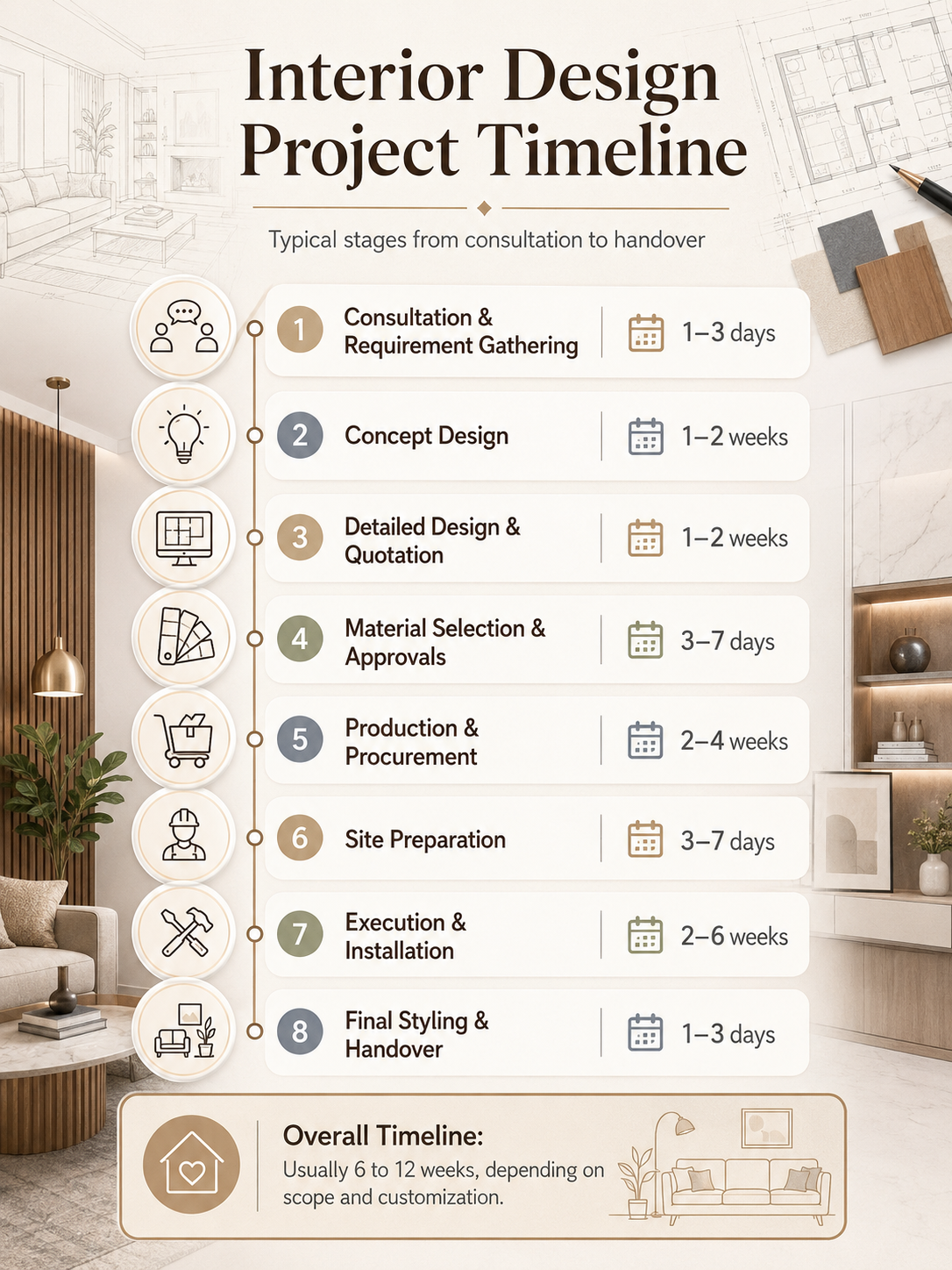
The complete process typically takes anywhere from 6 to 16 weeks for apartments and several months for larger villas, depending on project scope and customization levels. Design development, material procurement, manufacturing, and execution all contribute to the timeline. Well-planned turnkey projects usually progress more efficiently because all stages are coordinated by a single team.
Why are 3D designs important?
3D visualizations allow homeowners to see how their home will look before execution begins. They help eliminate uncertainty, reduce costly changes during execution, and make it easier to finalize materials and colors. Investing time in the design stage usually leads to smoother project execution later.
Can I skip the design stage and start execution directly?
While it is technically possible, it is generally not recommended. The design phase helps identify potential issues, finalize requirements, and establish a clear roadmap for execution. Skipping this stage often leads to confusion, design inconsistencies, and higher costs due to changes during construction.
What is the biggest factor in a successful interior project?
The biggest factor is planning. A well-planned project with clear requirements, finalized designs, detailed drawings, and approved materials will almost always perform better than a project that starts execution prematurely. Proper planning reduces delays, controls costs, and improves overall quality.
Final Thoughts
Interior design is not a single activity—it is a structured process that transforms ideas into a beautifully executed living space.
From:
- Requirement gathering
- Design development
- Material selection
- Manufacturing
- Execution
- Final handover
Every stage plays an important role in the success of the project.
Understanding this journey helps homeowners make better decisions, set realistic expectations, and enjoy a smoother experience from concept to completion.
📞 Planning Your Home Interiors?
At Foyer2Attic Design Studio, we follow a proven end-to-end process that includes:
- Requirement gathering
- Detailed design development
- 3D visualization
- Turnkey execution
- Quality checks and handover
👉 Schedule a free consultation and discover how we can transform your home from concept to reality.

Home Interiors Budget Pune: Step-by-Step Planning Guide
Planning a home interiors budget Pune doesn’t have to be stressful—this step-by-step guide shows you how to estimate costs clearly, prioritize what matters, and avoid surprise expenses. Whether you’re updating one room or designing a full home, you’ll get a practical framework for understanding home interior cost Pune in a way that fits your goals…
Interior Design Process Explained – From Concept to Execution (Complete Homeowner’s Guide for 2026)
One of the biggest concerns homeowners have before starting an interior design project is: “What exactly happens after I hire an interior designer?” Let’s explain the interior design process in this article. Many people assume interior design is simply choosing colors and furniture. In reality, a successful interior project involves a structured process that takes…
How Long Does Interior Design Take in Bangalore? (Real Timelines for 1BHK, 2BHK, 3BHK & Villas in 2026)
One of the first questions homeowners ask after purchasing a new home is: “How long does interior design take?”. Here’s a breakdown of interior design timelines. The answer depends on factors such as: Unfortunately, many homeowners in Bangalore underestimate timelines and end up frustrated when projects take longer than expected. This guide provides realistic interior…