
A room can look beautifully resolved and still feel tiring. The television competes with a work call, dining chairs scrape across the floor, and a conversation seems to linger after everyone has stopped speaking. Often, the missing layer is not another decorative object. It is attention to sound.
Acoustic comfort is appearing more prominently in Indian interiors coverage. Wipro Consumer Lighting's 18 August 2026 design-trends guide includes quieter rooms among its priorities. An apartment-design article published on 13 October 2026 also places sound on the homeowner's planning agenda. These are editorial signals, not a measured ranking of consumer demand. But the practical question is worth asking: can your home sound as considered as it looks?
First decide what you want to make quieter
There are two different problems hiding behind that question. One is sound bouncing around inside a room: the hollow quality of a video call or the bustle of an open living-and-dining area. The other is sound arriving from somewhere else, such as traffic or the neighbouring room.
Saint-Gobain Gyproc's building-acoustics guidance distinguishes sound absorption from sound insulation. Softer finishes can help with reflections within a space; they do not automatically stop sound passing through a wall, door or window. This distinction should guide the brief before anyone chooses a panel finish.
Describe the interruption precisely. “My calls sound echoey” is a more useful starting point than “I want soundproofing.” If the disturbance comes from building services or the structure, an acoustic specialist may be needed before an interiors solution is specified.
Map the household, not just the floor plan
Think about who uses each room and when. A television beside a bedroom wall may be harmless at lunchtime and frustrating late at night. A study nook connected directly to the kitchen might be convenient until calls overlap with cooking.
During home interior design and execution in Bangalore, include those routines in the first discussion. Mark work calls, television viewing, music practice and rest periods on the same layout. Where space permits, separate activities that regularly compete. A quieter room for calls can be more useful than an elaborate desk in the busiest corner.
Let everyday materials do some of the work
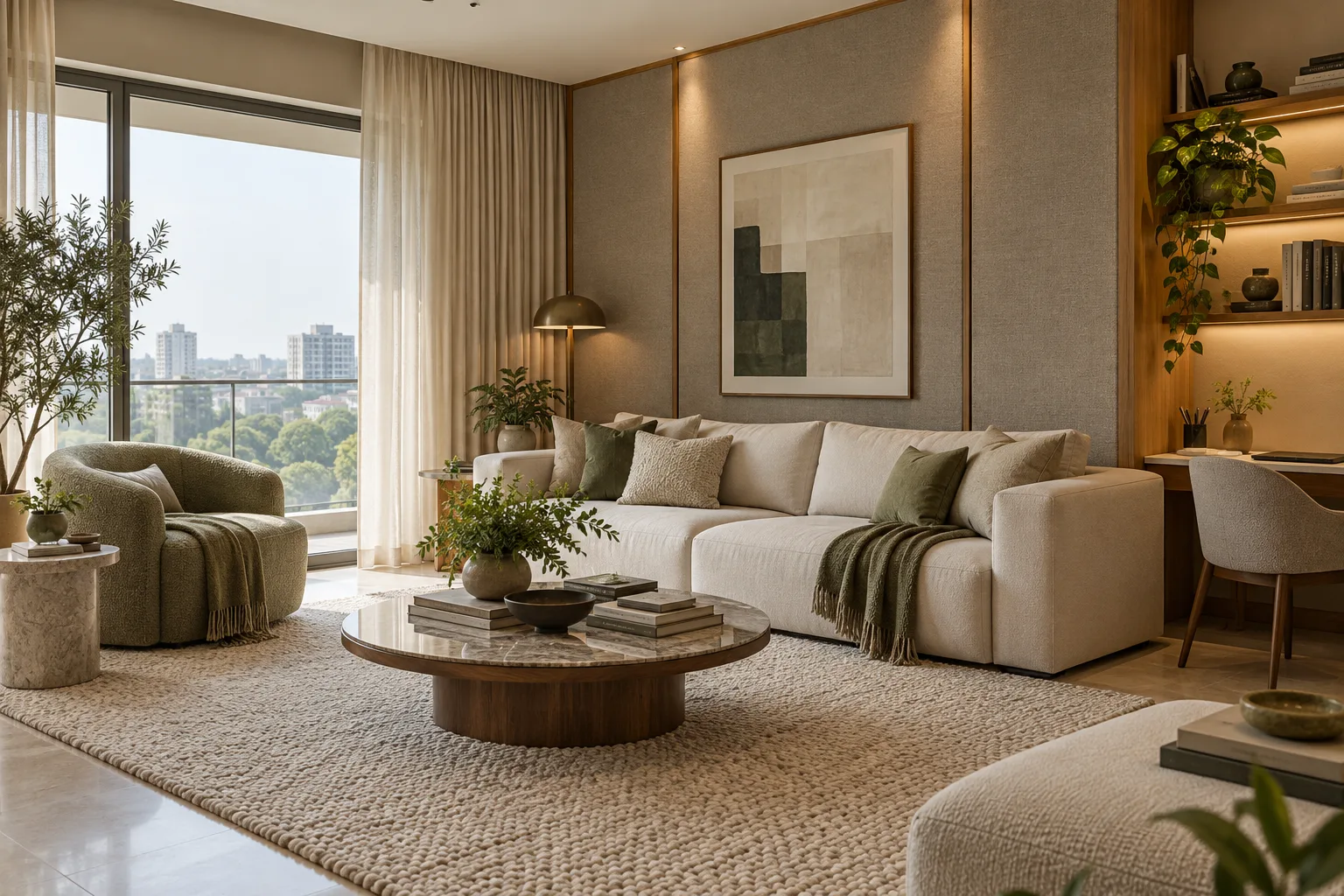
You do not need to turn the living room into a recording studio. Start with the finishes already being selected: upholstered seating rather than an entirely hard seating arrangement, a substantial rug where it suits the room, and curtains that are practical to draw. These choices can introduce softness without changing the home's identity.
Keep the palette restrained if you prefer a luxury, contemporary look. A textured fabric panel in the wall colour can sit comfortably beside oak cabinetry; generous curtains can read as architecture rather than decoration. Wipro's guide similarly includes soft furnishings within its discussion of quieter rooms.
Balance appearance with upkeep. Ask how upholstery will be cleaned, whether a rug is practical for your household, and how curtains will clear furniture and doors. A material that looks attractive but complicates everyday living is not a successful specification.
Specify acoustic features, not just acoustic-looking features
Decorative timber battens and a product designed for sound absorption are not interchangeable. If a wall or ceiling treatment is being proposed for acoustic performance, request the exact product details, relevant test information and installation requirements. Judge the assembly, not the showroom photograph.
The same applies to noise entering a room. A heavy-looking door is not proof of a quieter bedroom. Ask the designer or specialist to consider its frame, seals and surrounding construction together. Avoid promises of complete silence from a single replacement product.
Use this conversation to clarify responsibility, too: who approves the specification, who installs it, and who checks the finished result? That coordination matters more than adding an impressive-sounding material name to the quotation.
Give each room a different brief
Living room: Start with conversation and television use. Review seating, soft finishes and the relationship with adjoining bedrooms.
Home workspace: Consider both the sound inside the room and privacy during calls. Test the proposed desk position before committing to fixed joinery.
Bedroom: Identify the actual disturbance before buying treatments. Discuss traffic, corridor activity and services separately.
Children's room: Leave room for changing routines. Study, play and rest may need different arrangements as children grow.
Resolve the details before finishes are closed
Ask for acoustic decisions to appear in the drawings and scope, rather than remaining a verbal intention. Lighting, wiring, cabinetry and ceiling work should be coordinated with any specialist treatment. Check maintenance access and required ventilation before approving changes around services.
At Foyer2Attic, the design, production and execution approach provides a framework for discussing these interconnected decisions. The specific solution still depends on the site, agreed scope and any specialist assessment required.
Before handover, revisit the room using its intended activities. Make a call, sit where you would normally watch television, and note any unresolved disturbance. This is a practical review, not a substitute for formal acoustic testing when performance targets have been agreed.
A quieter home should still feel like your home
The aim is not to eliminate every household sound. It is to make everyday activities easier to share, and private moments easier to protect. The best starting point is a clear brief, followed by materials and details chosen for the problem they can genuinely solve.
Explore our residential interiors or discuss your home with Foyer2Attic Design Studio. Bring the sounds that bother you into the conversation alongside the colours and spaces you love.
Sources and further reading
Wipro Consumer Lighting, Modern Home Interior Design Trends in India 2026, 18 August 2026.
Aaditya Interior, Acoustic Comfort in Apartments: The Coming Priority, 13 October 2026.
Saint-Gobain Gyproc India, Building Acoustics Design, accessed 16 October 2026; publication date not stated.