
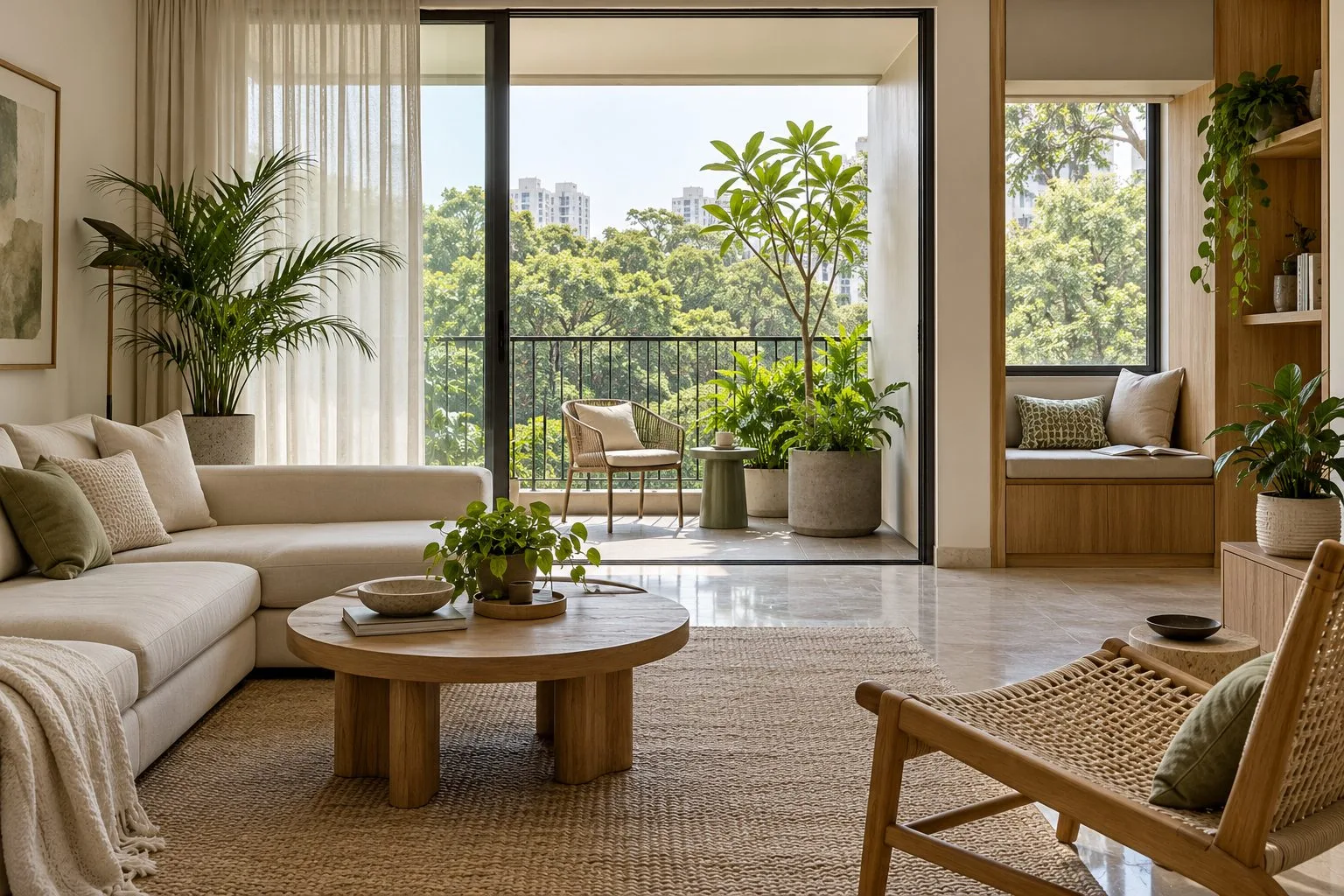
A home can have a dozen indoor plants and still feel disconnected from the outdoors. The sofa faces a blank wall, heavy curtains cover the best view, and the balcony is too crowded to sit in. Adding another planter will not solve those problems. A more useful starting point is to ask where you can experience daylight, greenery and a little breathing space during an ordinary day.
Biophilic interiors bring that question into the design brief. For an Indian apartment, the opportunity often lies in modest decisions: protecting a window view, giving a balcony a usable seat, or choosing textures that make a room feel inviting without adding visual clutter.
What biophilic design means at home
Terrapin Bright Green’s 14 Patterns of Biophilic Design describes connections with nature through views, light, airflow, materials and spatial experiences. Planting is one part of this broader approach. It does not require a jungle theme or an entirely green colour scheme.
Recent Indian editorial examples also show that nature-led interiors can take different forms. Architectural Digest India’s September 2026 collection includes a planted Chennai apartment balcony alongside courtyard homes and residences connected to their landscapes. The useful lesson for an apartment owner is to work with the setting available, rather than copy the scale of a villa.
Start with the window you already have
Before selecting finishes, spend time in each room at different hours. Note where direct sun falls, where glare makes a screen difficult to use, and which view you would actually enjoy seeing. Take photographs from seated eye level. A window that looks generous on a floor plan may offer little connection to the outdoors once a tall cabinet stands beside it.
Try arranging one everyday activity around the best opening. A reading chair, breakfast seat or compact work surface can make that view part of daily life. Keep frequently used storage within reach, so the arrangement remains practical. Avoid sacrificing essential circulation just to place furniture beside the glass.
Plan curtains in layers where needed. A sheer can soften daylight, while a separate opaque layer provides privacy or darkness. Check the result in the actual room: fabric that looks light in a showroom may noticeably dim a small apartment.
Make the balcony usable before filling it
A balcony should still have somewhere to stand, sit and clean after the plants arrive. Begin with the door swing, clear walking space and access to drains. Then choose a seat and a restrained planting arrangement. Two or three well-positioned pots may create a more enjoyable corner than a dense display that blocks the view.
Keep irrigation and drainage away from timber cabinets and interior flooring. Use suitable containers and accessible trays, and check for water collecting beneath them. Any fixed planter, screen or heavy installation needs a review of the building’s rules and relevant structural or waterproofing requirements.
Consider who will maintain the space when you travel. If regular watering and pruning are unrealistic, simplify the planting brief. A balcony that is easy to care for is more likely to remain part of the home.
Choose plants for conditions, not photographs
Record the light, wind and exposure at each proposed plant position, then ask a knowledgeable nursery to suggest suitable options. A bright balcony and a deep interior shelf need different choices. Confirm suitability for children and pets before buying, and keep pots out of narrow routes.
Give each plant enough accessible space for care and replacement. Avoid placing soil-filled containers above electronics, upholstered headboards or difficult-to-clean joinery. Treat planting as a living element with maintenance needs, rather than a permanent decorative accessory.
Use natural textures with a practical specification
Timber grain, woven details, stone and tactile fabrics can help build a grounded palette. There is no need to use all of them. Choose one or two materials that suit the room and repeat them with restraint. A timber table and a woven chair can be enough against simple painted walls.
Natural origin does not automatically establish durability, low emissions or suitability for a wet location. Ask for the exact product, finish, care instructions and relevant test information. Discuss how an exposed surface will handle spills, sunlight and routine cleaning before approving it.
For a busy family home, reserve delicate textures for places with lighter wear. Use robust, cleanable surfaces where shoes, food and frequent handling are unavoidable. The aim is a room you can live in comfortably, without constant concern about damage.
Create a small place to pause
Consider a comfortable seat with a view out and some sense of enclosure behind or beside it. This could be a chair near a window, a short bench at the balcony threshold, or a reading corner beside a bookcase. It does not need to become an elaborate built-in feature.
Check seat depth, back support, glare and the position of a reading light. Keep charging cables and side tables convenient. These details determine whether the corner becomes a daily habit or simply appears in the handover photographs.
Put the idea into the design brief early
When speaking with home interior designers in Bangalore, describe the experience you want: breakfast near daylight, a manageable balcony garden, or a quiet place to read. Ask the designer to show how furniture, storage, curtains and lighting support it. Resolve watering access and material care before production drawings are approved.
You can use our interior design process guide to organise those decisions, and our storage planning article to keep practical requirements in view. Begin with one successful corner, observe how you use it, and let that guide the rest of the home.
Featured image: AI-generated illustrative design concept; not a photograph of a completed Foyer2Attic project.
Sources and further reading
Architectural Digest India: 7 biophilic homes in India, 15 September 2026.
Terrapin Bright Green: 14 Patterns of Biophilic Design, 2014.