
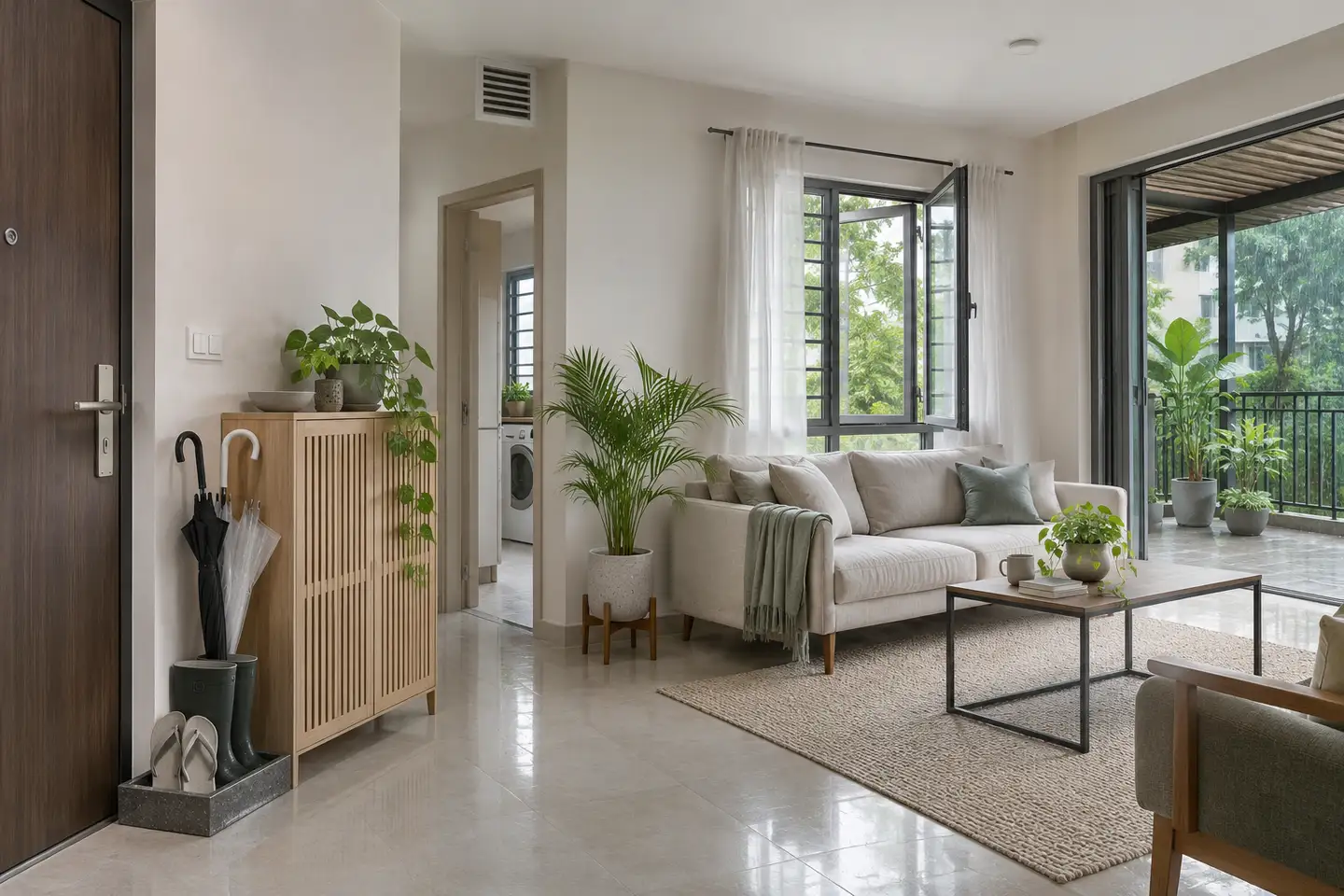
Featured image: illustrative design concept.
A home does not become moisture-smart simply because the bathroom is tiled or the walls use “anti-fungal” paint. Moisture can arrive as wind-driven rain, plumbing leakage, rising damp, condensation or humid outdoor air. The interior succeeds when it keeps water out where possible, reveals problems early and dries efficiently when moisture enters.
This matters across India, from coastal Karnataka and Mumbai to monsoon-season Bengaluru apartments. A September 2026 review led by Indian Institute of Science researchers describes moisture as a factor connecting indoor air quality, thermal comfort, material durability and occupant wellness. For interiors, moisture management is a system, not a finish.
Find the source before treating the surface
A stain, swollen shutter or musty smell is evidence, not a diagnosis. Before repainting, establish whether the source is a leaking pipe, failed window seal, exterior crack, wet bathroom junction, air-conditioner drain, condensation or furniture pressed against a damp wall. Covering the symptom can hide the pattern and allow deterioration to continue.
Map where and when the sign appears. Does it worsen after rain, after a shower, when the air-conditioner runs or only inside a closed wardrobe? Photograph the area and note changes. Plumbing, waterproofing, façade and air-conditioning faults need the appropriate qualified professional; interior carpentry should wait until the cause and drying requirements are resolved.
The World Health Organization’s updated guidance emphasises preventing persistent dampness and microbial growth, identifying root causes and completing prompt remediation. Extensive or recurring mould should be assessed professionally rather than treated as a routine paint touch-up.
Create a wet-to-dry entrance sequence
During the rains, the foyer is where water, mud and umbrellas first enter. Give these items a landing zone instead of letting them move through the house. A washable textured floor or removable tray can receive wet footwear. An umbrella stand should drain safely and be easy to clean. A small bench makes changing footwear simpler.
Shoe cabinets need ventilation. Slatted, perforated or breathable shutters help damp shoes dry instead of trapping odour. Keep the base raised or detailed so the floor beneath remains accessible. Avoid untreated absorbent baskets where dripping umbrellas or footwear will touch them.
Let wardrobes and furniture breathe
Large units fixed tightly against exterior walls can create slow-drying pockets. Where conditions permit, allow a considered air gap and avoid filling it with boxes. Make skirting and end panels accessible to inspection, particularly on walls exposed to rain.
Inside wardrobes, overcrowding restricts circulation. Seasonal airing, sensible shelf spacing and dry clothing are more useful than fragrance masking a musty smell. If a wardrobe repeatedly feels damp, investigate the wall, floor and room rather than continually replacing moisture absorbers.
Architectural Digest India’s August 2026 monsoon guide similarly recommends airflow behind large furniture and notes that heavy fabrics can retain humidity. Removable, washable covers and lighter window treatments may recover faster during prolonged wet weather than dense layers.
Detail wet zones for access and drying
Bathrooms, utility areas and kitchens combine water, warm vapour, concealed pipework and storage. Their design should make failures visible and serviceable. Provide access to traps, valves and connections rather than sealing them behind cabinetry. Coordinate exhaust routes to the exterior where permitted, and avoid discharging humid air into a loft or closed cabinet.
Vanity and sink units should respond to actual exposure. Materials, edge sealing, hardware and junction details must be specified as a system; a moisture-resistant board does not compensate for an unsealed cut edge or persistent leak. Floor and wall junctions, penetrations and shower interfaces require properly designed waterproofing by qualified applicators before finishes.
After bathing or cooking, extraction and airflow need time to remove vapour. Keep exhaust fans accessible for cleaning because dust reduces performance. In windowless wet areas, mechanical ventilation is especially important and should be sized by the relevant professional.
Choose materials by location, not label
The same material can perform differently in a dry bedroom, a humid wardrobe and a bathroom vanity. Define each zone as regularly wet, occasionally splashed, humid but dry, or protected. Then select the substrate, surface, adhesive, edge treatment and hardware for that exposure.
A 2025 field study across coastal Karnataka found that moisture sources, ventilation, roof form and maintenance all influenced indoor fungal growth. Its sample was limited, so it should not declare one material universally superior. It does reinforce a valuable principle: assemblies and maintenance matter as much as the visible finish.
Pair moisture planning with guidance on healthier interior materials. Where components may eventually swell, corrode or wear, the strategies in repairable interiors can reduce future replacement disruption.
Coordinate cooling without condensation traps
Air-conditioning can remove moisture, but cold surfaces and poorly insulated ducts or pipes can create condensation. Drain lines need correct routing and maintenance access. Avoid boxing equipment into unventilated enclosures. If water appears on a grille, pipe or wall, investigate the cause rather than accepting it as normal.
Natural ventilation is useful when outdoor conditions allow; during heavy rain or very humid periods, extraction or controlled dehumidification may be more effective. The right mode changes with weather and room use, as discussed in heat-resilient interiors.
Ask for a moisture review before production
When evaluating residential interior designers in bangalore, ask how exterior walls, wet zones, air-conditioner drains, window junctions and service access will be checked before drawings are released for production. The answers should appear in site observations, coordinated drawings and specifications—not only in promises about waterproof products.
Before handover, record concealed pipe routes, valves, access panels and waterproofed areas. Keep product and applicator details, photograph junctions before they are covered, and agree on signs that should trigger inspection. These records turn future maintenance from guesswork into a controlled process.
A practical moisture-smart checklist
Trace every stain, smell or swollen panel before refinishing.
Provide a washable entrance zone and ventilated shoe storage.
Allow inspection and airflow around vulnerable furniture and wardrobes.
Keep plumbing, drains, exhaust fans and air-conditioning lines serviceable.
Specify wet-zone materials as assemblies, including edges and hardware.
Document concealed services and inspect after heavy rain.
A moisture-smart home is not one that never encounters humidity. It contains wet items, dries predictably, exposes failures early and allows damaged components to be reached without dismantling half the room. That practicality protects the interior long after the first monsoon.
Sources
Priyadarshani, Mani and Maskell, “The Role of Moisture in the Built Environment for Occupant Wellness: A Critical Review”, 1 September 2026.
Ara, Das and Nayak, “Impact of Indoor Fungal Growth on Building Materials in Coastal Karnataka”, 5 November 2025.
Architectural Digest India, “9 tips for a monsoon-ready home that keeps moisture, mould and maintenance at bay”, 9 August 2026.
World Health Organization, “Compendium of WHO and other UN guidance on health and environment: Dampness and mould”, 2024 update.